Dietary Fats: Essential for Health
Understanding the types, functions, and dietary balance of fats in human nutrition
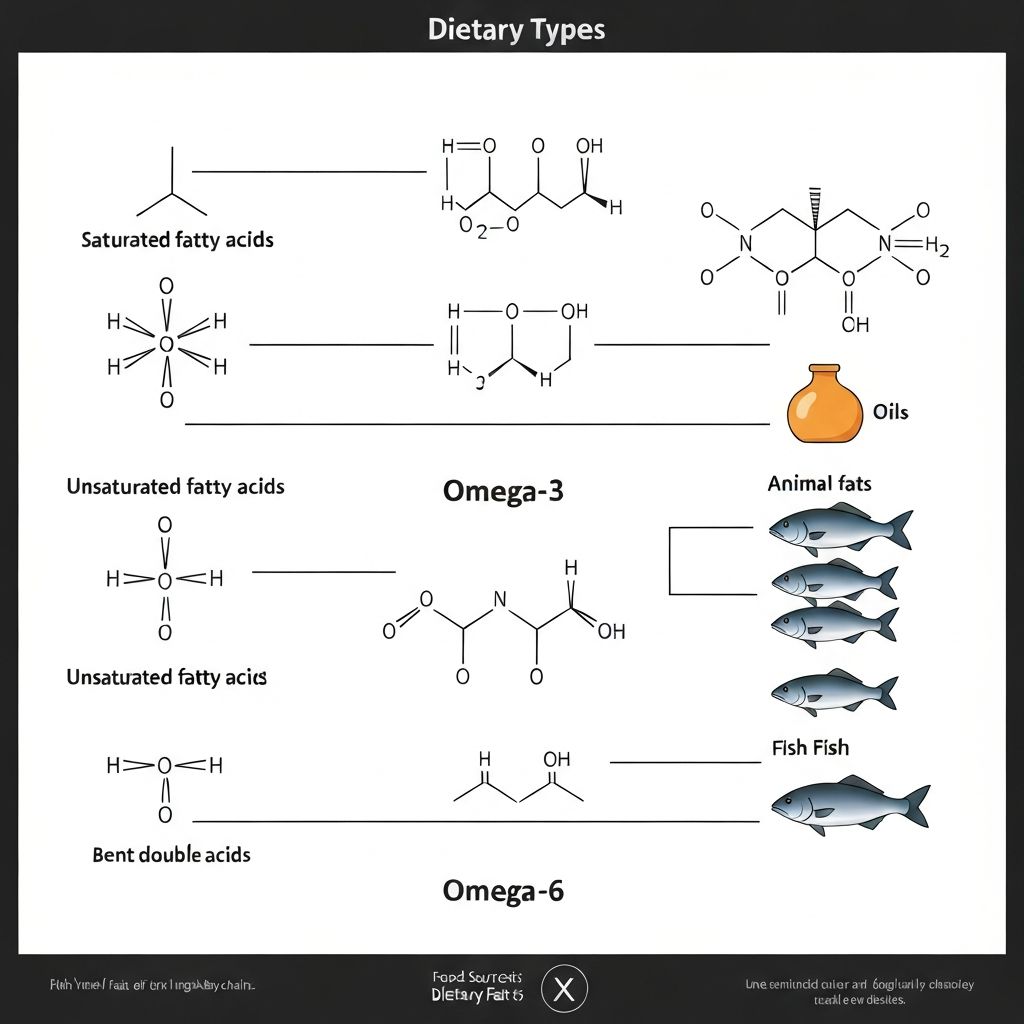
Dietary fats are diverse molecules with essential biological functions
Introduction
Fats, or lipids, are one of the three macronutrients alongside proteins and carbohydrates. While often portrayed negatively in popular culture, fats are essential for numerous physiological processes. Understanding the different types of dietary fats and their biological roles is fundamental to informed nutritional decision-making.
Types of Dietary Fats
Saturated Fatty Acids
Structure: Fatty acids with no double bonds between carbon atoms; packed tightly, solid at room temperature.
Dietary Sources: Animal products (meat, dairy, eggs), coconut oil, palm oil
Functions: Structural component of cell membranes; cofactor for vitamin D synthesis; precursor for steroid hormones
Considerations: Traditional nutritional guidance suggests limiting saturated fat; current research suggests quality and context matter more than quantity.
Unsaturated Fatty Acids
Structure: Fatty acids with one or more double bonds; fluid at room temperature.
Monounsaturated Fatty Acids (MUFAs)
- Dietary Sources: Olive oil, avocado, almonds, hazelnuts, peanut oil
- Functions: Structural component of cell membranes; anti-inflammatory properties
- Research: Associated with cardiovascular health when part of balanced diet
Polyunsaturated Fatty Acids (PUFAs)
- Dietary Sources: Vegetable oils (soybean, corn, canola), fish, nuts, seeds
- Functions: Membrane fluidity; precursors to signaling molecules; anti-inflammatory and pro-inflammatory roles
- Ratio Importance: Omega-6 to omega-3 ratio affects inflammation; most modern diets have excessive omega-6
Essential Fatty Acids
Two fatty acids are classified as "essential" because the human body cannot synthesize them:
Alpha-Linolenic Acid (ALA)
Classification: Omega-3 fatty acid
Sources: Flaxseeds, chia seeds, walnuts, leafy greens, canola oil
Functions: Precursor to EPA and DHA; involved in inflammatory regulation
RDA (Adult Males): 1.6 g/day
Linoleic Acid (LA)
Classification: Omega-6 fatty acid
Sources: Vegetable oils, nuts, seeds
Functions: Precursor to arachidonic acid; involved in immune and inflammatory signaling
RDA (Adult Males 19-50): 17 g/day
Long-Chain Omega-3 Fatty Acids
While not technically essential (can be synthesized from ALA), eicosapentaenoic acid (EPA) and docosahexaenoic acid (DHA) are conditionally essential and increasingly recognized as important:
EPA (Eicosapentaenoic Acid)
Sources: Fatty fish (salmon, mackerel, sardines), fish oil, seaweed
Functions: Potent anti-inflammatory signaling; involved in cardiovascular and nervous system function
DHA (Docosahexaenoic Acid)
Sources: Fatty fish, fish oil, algae supplements
Functions: Structural component of brain and retina; involved in neuroprotection and cognitive function
Trans Fats
Structure: Unsaturated fats with hydrogen atoms on opposite sides of double bond (artificially created through hydrogenation or naturally present in small amounts in animal products)
Found in: Partially hydrogenated oils, processed foods, commercial baked goods
Impact: Associated with increased cardiovascular disease risk; consumption should be minimized
Biological Functions of Dietary Fats
Energy Storage
Fats provide 9 calories per gram (vs. 4 for protein/carbohydrates); stored in adipose tissue for long-term energy reserves.
Cell Membranes
Phospholipids and cholesterol are structural components; fat composition affects membrane fluidity and function.
Hormone Production
Cholesterol is the precursor for steroid hormones (testosterone, cortisol) and bile acids for fat digestion.
Vitamin Absorption
Fat-soluble vitamins (A, D, E, K) require dietary fat for absorption in the digestive system.
Signaling Molecules
Derived from omega-3 and omega-6 fatty acids; regulate inflammation, immune response, and vascular function.
Brain Function
DHA is essential component of brain tissue; supports cognitive development and neuroprotection throughout life.
Fat Digestion and Absorption
Dietary fats undergo several processes before absorption:
- Emulsification: Bile acids break large fat droplets into smaller micelles
- Enzymatic Hydrolysis: Pancreatic lipase breaks triglycerides into fatty acids and glycerol
- Absorption: Fatty acids are absorbed by intestinal epithelial cells and packaged into chylomicrons for transport
- Transport: Chylomicrons carry fats through lymphatic system to tissues
Dietary Fat Intake Recommendations
Current scientific consensus suggests:
- Total Fat: 20-35% of total daily calories
- Saturated Fat: Less than 10% of calories (though recent research questions strict limitations)
- Trans Fat: Minimize consumption
- Omega-3/Omega-6 Ratio: Emphasis on increasing omega-3 sources relative to omega-6
Fat Quality and Dietary Pattern
The type and quality of fats consumed, within the context of overall dietary pattern, appears more important than total fat quantity. Mediterranean-style diets—rich in monounsaturated and omega-3 fats—are associated with positive health outcomes. Conversely, diets high in ultra-processed foods containing trans fats and oxidized oils show negative associations.
Conclusion
Dietary fats are essential macronutrients with diverse and critical biological functions. Rather than categorizing fats as simply "good" or "bad," it is more accurate to understand their chemical properties, sources, and physiological roles. A dietary approach emphasizing diverse fat sources—particularly from whole foods, with adequate omega-3 fatty acids and minimized trans fats—supports optimal health and physiological function.
Related Articles
Understanding Proteins and Amino Acids
Learn about another essential macronutrient and its functions.
Carbohydrates and Energy Metabolism
Explore the complete picture of macronutrients and energy.